
Investors will maintain a cautious stance.
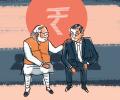
'India's economic fundamentals are much too strong to be affected by his resignation,' says B S Raghavan.

Raghuram Rajan, who has been pilloried by his critics for keeping interest rates high and has also been accused of stifling growth.

Nobutaka Kitajima, chief investment officer -- equity, LIC Nomura Mutual Fund, tells Business Standard the reaction to the Fed's statements has been overdone and the current downturn has punished certain stocks much more than their inherent economic worth and business potential.

Thanks to the recapitalisation by the government and measures taken by the central bank, collapse of any large housing finance company won't pose as big a risk as it had six months ago.

The broader NSE Nifty closed 1.25 points, or 0.01 per cent down at 10,564.05.

A smartly executed reform-recap will be the best booster for the economy, says Ajay Chhibber.

Standard Chartered on Friday lowered India's growth forecast for the current financial year to 4.7 per cent from earlier 5.5 per cent, citing "upside risks" to inflation and fiscal deficit.

It's the first time in my memory that I have seen a negative expected return for equities, notes Akash Prakash. Hopefully, this implies the consensus is being too negative, and markets, as usual, will surprise everyone and deliver the least likely outcome.

The survey noted that advertising campaigns supported the increase in new work growth in the sector amid competitive pressures.

Change will have to begin with Mr Modi, who by all accounts has shown little active interest in macro-economic issues, preferring instead to focus on the effective implementation of projects and programmes, points out T N Ninan.

Investing in the US market provides Indian investors a hedge against the rupee's long-term tendency to depreciate against the dollar.

Hopefully, the grey world of central banking in a nation hit by demonetisation, will lighten up with some of his notes soon.

Raghuram Rajan optimistic about passage of GST
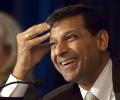
'Raghuram Rajan's contribution to the country's economy is "exemplary" and he would always be remembered for his outstanding work.'

'Success will require political skill, not just economic expertise'

Beside manufacturing, deceleration was also witnessed in sectors like agriculture, construction and electricity, gas and water supply.
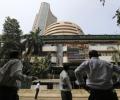
After turning net buyers for the fifth straight month till June, foreign portfolio investors (FPIs) withdrew a net of Rs 11,743 crore ($1.7 billion) in July. This was their highest outflow since October 2018.

Overseas investors were one of the heavy buyers.

The global ratings agency, however, cautioned that high debt burden remains a constraint on the country's credit profile.

'For the next two years, we expect the bulk of earnings growth contribution from sectors like financials and energy, where the outlook remains positive, while the sectors which are linked to domestic consumption and are currently witnessing strains on margins have low salience for Nifty earnings.'

Given the developments, analysts expect fiscal and monetary support from the government and RBI to revive sentiment. However, recovery, they say, from these levels will be slow and painful.

It is by now quite clear that in all likelihood the US Federal Reserve will hike interest rates in its next meeting in mid-December.

'We think FY18 will end with a 10 to 12 per cent earnings growth, but FY19 will see a recovery to over 15 per cent.'

RBI policy surely cannot impact agflation, in any case.

The wider Nifty hit a low of 10,033.35 before finishing at 10,044.10, down 74.15 points or 0.73 per cent.

'We all wanted a strong Centre with a decisive mandate from the people, to allow them to take bold decisions.'
'Rajan's exit will have a great impact on the economy.'

History would indicate that a recession is not that far off.

Eminent economist Arvind Panagariya has said India is on the cusp of returning to a high growth trajectory and voiced confidence that the country will become the world's third-largest economy by 2027-28. Currently, India is the fifth largest economy "so it's another five years.We are already in (the year) 2023. "So 2027-28, India should be the third-largest economy," Panagariya, Columbia University Professor and former Vice Chairman of NITI Aayog, told PTI in an interview in New York.

India is among the worst-performing BRICS nations along with Brazil (ranked even lower than India at 71st this year).

The Indian government and RBI must keep foreign equity investors happy and avoid crushing growth expectations, notes Akash Prakash.

The World Bank on Tuesday projected India's economy to grow at 8.3 per cent in 2021 and 7.5 per cent in 2022, even as its recovery is being hampered by an unprecedented second wave of the COVID-19, the largest outbreak in the world since the beginning of the deadly pandemic. The Washington-based global lender, in its latest issue of Global Economic Prospects released here, noted that in India, an enormous second COVID-19 wave is undermining the sharper-than-expected rebound in activity seen during the second half of Fiscal Year 2020/21, especially in services.
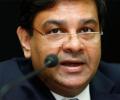
Janmejaya Sinha lays down Urjit Patel's agenda - cleaning up bank balance sheets, evaluating robustness of CPI and pushing for digitisation in financial services.

'That is not a democratic ideal obviously, but it is a practical reality.' 'It is a consistent feature of politicians in Pakistan that their rhetoric on the army softens the closer they get to the seat of power.'

The BSE Sensex was among the world's best performers in 2014, rising almost 30 per cent after Prime Minister Narendra Modi took office on promises of reforms to boost growth

Jaitley's team presents a quintessential mix of foreign-educated, intellectual technocrats and seasoned bureaucrats

Observing that the turmoil in global capital should come as a wake-up call for South Asia, which was the second-fastest growing region in the world in the aftermath of the global crisis, the World Bank said on Wednesday its recent performance has been less stellar, and it has been sustained by potentially volatile portfolio inflows.
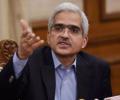
RBI Governor Shaktikanta Das said the central bank saw economic growth slowdown in February, prompting it to cut rates ahead of the curve and wondered why markets were surprised with the decision to pause rate reduction. Noting that there is a need for an "informed and objective discussion" on the country's economy, Das said the RBI would do "whatever is necessary" to address growth slowdown, spikes in inflation as well to ensure good health of banks and non-bank lenders. The apex bank went for five consecutive rate cuts starting in February this year, making it a cumulative reduction of 1.35 per cent.

A freely convertible country must have sound macroeconomic policies.
